UAE Property Market · 17 August 2026
Dubai Real Estate Market 2026: What Buyers and Investors Need to Know
A balanced, practical guide to the Dubai real estate market 2026: price trends, off-plan vs ready property, what areas buyers are watching, and a due-diligence checklist for anyone buying or investing.
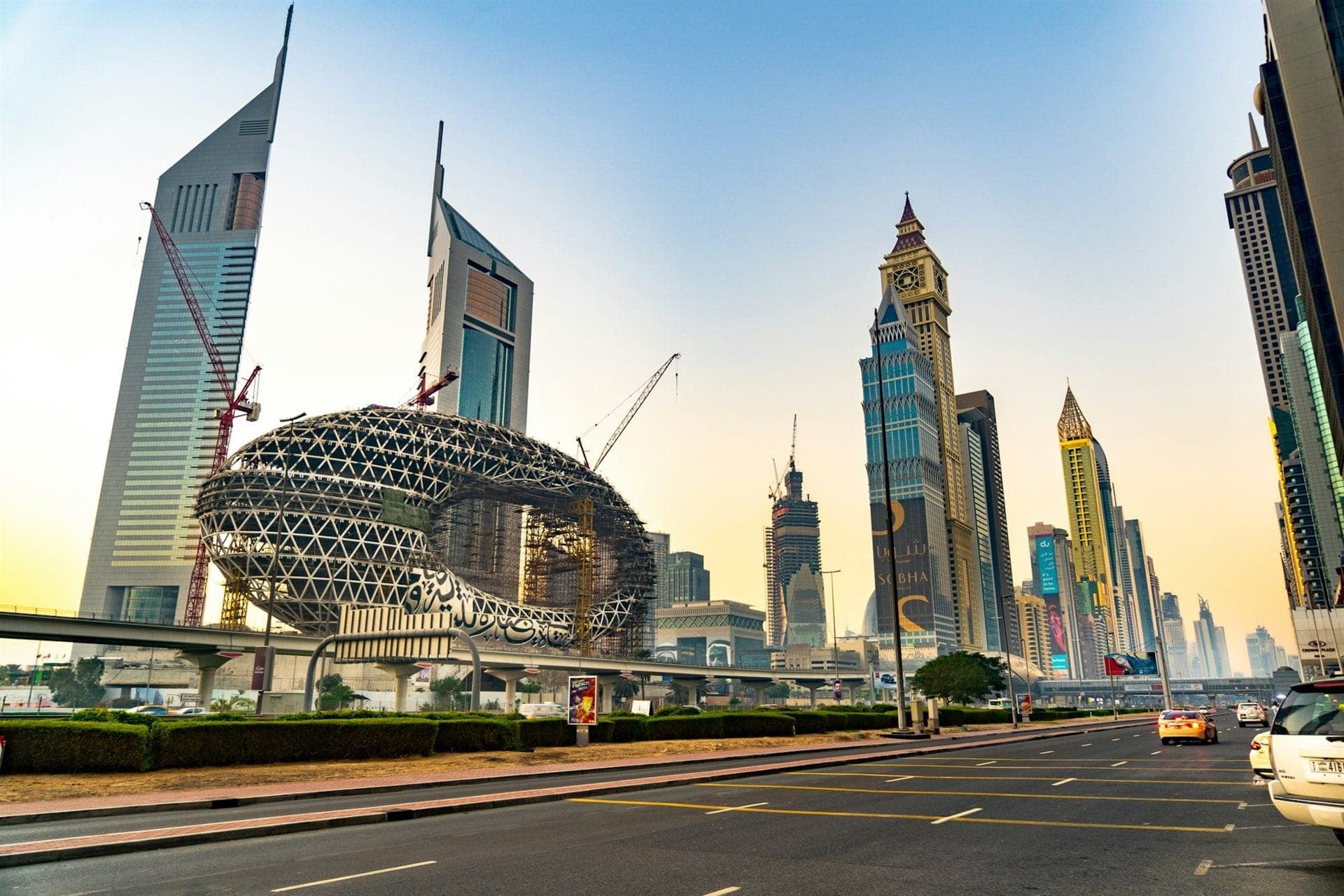
Dubai's property market has moved through several distinct phases over the past decade, and heading into 2026 it has entered another one: a shift from the rapid, headline-driven growth of previous cycles toward a market that rewards closer analysis. Buyers scrolling listings and investors comparing yields are asking the same underlying question: is now still a reasonable time to buy, and if so, where?
This guide looks at the Dubai real estate market 2026 from a practical angle: how prices are actually behaving, the real differences between off-plan and ready property, what to weigh before committing capital, and the checks that protect a buyer regardless of which way the wider market moves. None of it replaces professional advice on a specific unit, but it should make that conversation more informed.
The Dubai Real Estate Market 2026: A More Measured Phase
For much of the past five years, Dubai's residential market was defined by strong, broad-based demand: population growth, an expanding base of long-term residency holders, and a wave of relocations drove activity across almost every segment at once. Heading into 2026, the market looks different in character rather than in direction. Transaction activity remains healthy, but growth has become more selective, concentrated in specific communities, property types and quality tiers rather than lifting every listing evenly.
That shift matters because it changes how a market update should be read. A single average price or a single growth percentage for "Dubai" says very little about what is happening to a two-bedroom apartment in one community versus a townhouse in another. The authorities that track this data, including the Dubai Land Department, and international advisory firms such as CBRE and JLL, increasingly frame their reporting this way too, by segment rather than by headline.
What Is Happening to Dubai Property Prices?
The broad pattern moving through 2026 is one of moderation rather than reversal. After several years of sustained appreciation, the pace of price growth has slowed in most areas, and a small number of high-supply submarkets have seen pricing come under more pressure as new stock is absorbed. This is a normal stage in a property cycle that has run hot for an extended period, and it is a different thing from a market-wide downturn.
What makes a single "Dubai price" figure misleading is the scale of variation underneath it. Prices can move in opposite directions within the same city in the same quarter, depending on:
- Community — established, land-constrained areas typically behave differently from newer districts still absorbing large handover volumes.
- Property type — villas and townhouses have generally traded differently from apartments, which make up the bulk of new supply.
- Quality and finish — well-managed buildings with lower service charges and better upkeep tend to hold pricing better than comparable units in poorly managed developments.
- Age and condition — a freshly handed-over unit and a ten-year-old resale in the same building can trade at meaningfully different price points.
For a closer look at how prices and transaction volumes have actually moved so far this year, see our companion piece on the Dubai real estate market trends and forecast, which tracks the current data in more detail.
Off-Plan vs Ready Property in Dubai
One of the first decisions most buyers face is whether to buy off-plan, directly from a developer, or a ready property on the secondary market. Each comes with a different risk and reward profile, and the right choice depends on the buyer's timeline, financing, and appetite for construction risk.
Off-Plan Property
Off-plan units are purchased before or during construction, typically through a staged payment plan tied to construction milestones or a fixed schedule set by the developer. The appeal is usually a lower initial outlay, an extended payment period that reduces reliance on a mortgage, and access to newer designs and amenities. The trade-offs are real too: buyers carry construction and handover-timeline risk, cannot generate rental income until completion, and are buying based on renderings and a sales gallery rather than a finished, inspectable product.
Ready (Secondary-Market) Property
Ready property is complete, often previously owned, and can be inspected, valued against comparable transactions, and rented out immediately after transfer. It suits buyers who want income from day one or who prefer to avoid construction risk altogether. The trade-offs shift too: ready property usually requires a larger upfront payment or full mortgage financing, and pricing is more transparent, which can mean less room to negotiate than in an off-plan launch.
Neither route is inherently better; they answer different questions. An off-plan purchase is a bet on future delivery and a location's trajectory. A ready purchase is a bet on a property and a rental market that already exist and can be verified today. Our step-by-step guide on how to buy property in Dubai covers the practical side of managing either route.
What Areas Are Buyers Watching?
Rather than a fixed list of "best areas," which shifts as supply and demand change, it is more useful to understand the factors that make a location resilient over time. Buyers and investors comparing communities in the Dubai real estate market 2026 are generally weighing:
- Connectivity — proximity to major road networks and public transport, particularly the Metro, which affects both rental demand and resale liquidity.
- Proximity to business districts — how easily a community connects to hubs such as DIFC, Downtown Dubai and Business Bay shapes tenant demand.
- Schools and lifestyle amenities — family-oriented buyers weigh nearby schooling, parks, retail and healthcare heavily, and these take time to mature in newer districts.
- Future infrastructure — planned roads, transport links and community facilities can change a location's trajectory well before they open.
- Rental demand — a community's track record of tenant demand is a stronger signal than a marketing brochure, since it reflects how people actually choose to live.
- Supply pipeline — the volume of similar units still under construction or planned nearby affects both future price growth and rental competition.
Our guide to the best areas to live in Dubai breaks down how several established and emerging communities compare against these factors in more detail.
Is Dubai Real Estate Still Attractive for Investors?
The answer depends on the specific deal, not on the market as a whole. A balanced view weighs both sides.
What tends to work in Dubai's favour
- Rental income potential — Dubai has historically offered competitive gross yields relative to many established global cities, particularly in mid-market apartment communities, though yields vary by area and property type.
- Capital appreciation — well-located property in supply-constrained communities has generally appreciated over multi-year holding periods, though short-term timing is far less predictable.
- No annual property tax or personal income tax on rental earnings, which is a structural advantage over many other jurisdictions.
What to weigh carefully
- Transaction costs — budget for the Dubai Land Department transfer fee, agency commission and other closing costs on top of the purchase price. Our breakdown of the real cost of buying property in Dubai covers these line by line.
- Financing — mortgage terms for residents and non-residents differ, and financing costs directly affect net returns, particularly on leveraged purchases.
- Service charges — these recur annually regardless of occupancy and vary significantly by building, so they belong in any yield calculation, not just the purchase price.
- Vacancy risk — periods between tenants reduce actual annual income below the advertised gross yield, and this risk tends to be higher in oversupplied submarkets.
- Market cycles — property values move in cycles everywhere, and Dubai is no exception; a purchase timed at a cyclical peak carries different risk than one made during a more measured phase.
- Developer quality — track record on delivery timelines, build quality and after-handover service varies meaningfully between developers. Our developer directory is a starting point for comparing the major names building in Dubai today.
- Location risk — not every community performs the same way through a cycle; land-constrained, well-established areas have generally shown more price resilience than newer districts absorbing large handover volumes.
None of this makes Dubai uniquely risky or uniquely safe. It makes it a real estate market, where the fundamentals of the specific asset matter more than the country-level narrative.
What Should Buyers Check Before Buying?
Whatever the wider market is doing, a disciplined due-diligence process protects a buyer far more than trying to time the cycle. Before committing to any purchase, it is worth checking:
- Developer reputation — delivery history, build quality and after-sales service on previous projects. See our developer directory for an overview of who is building in Dubai.
- Title and developer documentation — confirm the project's registration with the Dubai Land Department and RERA, and that the unit's title or Oqood registration is in order.
- Payment plan — the exact schedule, what is due at each milestone, and what happens if handover is delayed.
- Service charges — the current rate per square foot and the building's service charge history, not just the year-one figure often quoted at launch.
- Community infrastructure — what is actually built and operating today versus what remains on a masterplan.
- Handover timeline — the developer's track record of delivering on the dates originally promised, not just the date written into the contract.
- Comparable transactions — recent, verified sale prices for similar units in the same building or community, rather than asking prices alone.
- Rental demand — realistic vacancy periods and achievable rents for comparable units, if income is part of the plan.
- Resale liquidity — how actively units in that building or community trade on the secondary market. Our guide on how to sell property in Dubai is a useful reference for what a future exit involves.
- Financing requirements — pre-approval terms, deposit requirements, and how financing costs affect the overall return, particularly for non-resident buyers.
Dubai Real Estate Outlook for the Rest of 2026
Looking at the remainder of 2026, the most defensible outlook is a measured one. Performance is likely to continue diverging by segment: established, supply-constrained communities are generally better placed to hold value than areas absorbing heavy new handovers, and villas and larger units have shown different demand dynamics than apartments through recent cycles.
No credible forecast can guarantee price direction for every community, and buyers should treat any prediction, including this one, as a general framework rather than a certainty. The more useful exercise is tracking the specific submarket under consideration, its supply pipeline, its rental track record, and its recent comparable transactions, rather than relying on citywide averages to make a decision.
Conclusion
The Dubai real estate market 2026 is not a single story. It is dozens of smaller markets, each shaped by its own supply pipeline, tenant base and pricing history, sitting underneath one city-wide narrative. Buyers and investors are generally better served by evaluating the specific property, its location, and the financial fundamentals of the deal in front of them, rather than acting on broad headlines about the market as a whole.
First Key International Real Estate works across Dubai's major communities and developers, and can help put a specific opportunity in context against current data. Learn more about our team, or get in touch to talk through a purchase, a sale, or simply what a particular community looks like right now.